

Customer Identity and Access Management (CIAM)
Customer, partner, and agentic identities
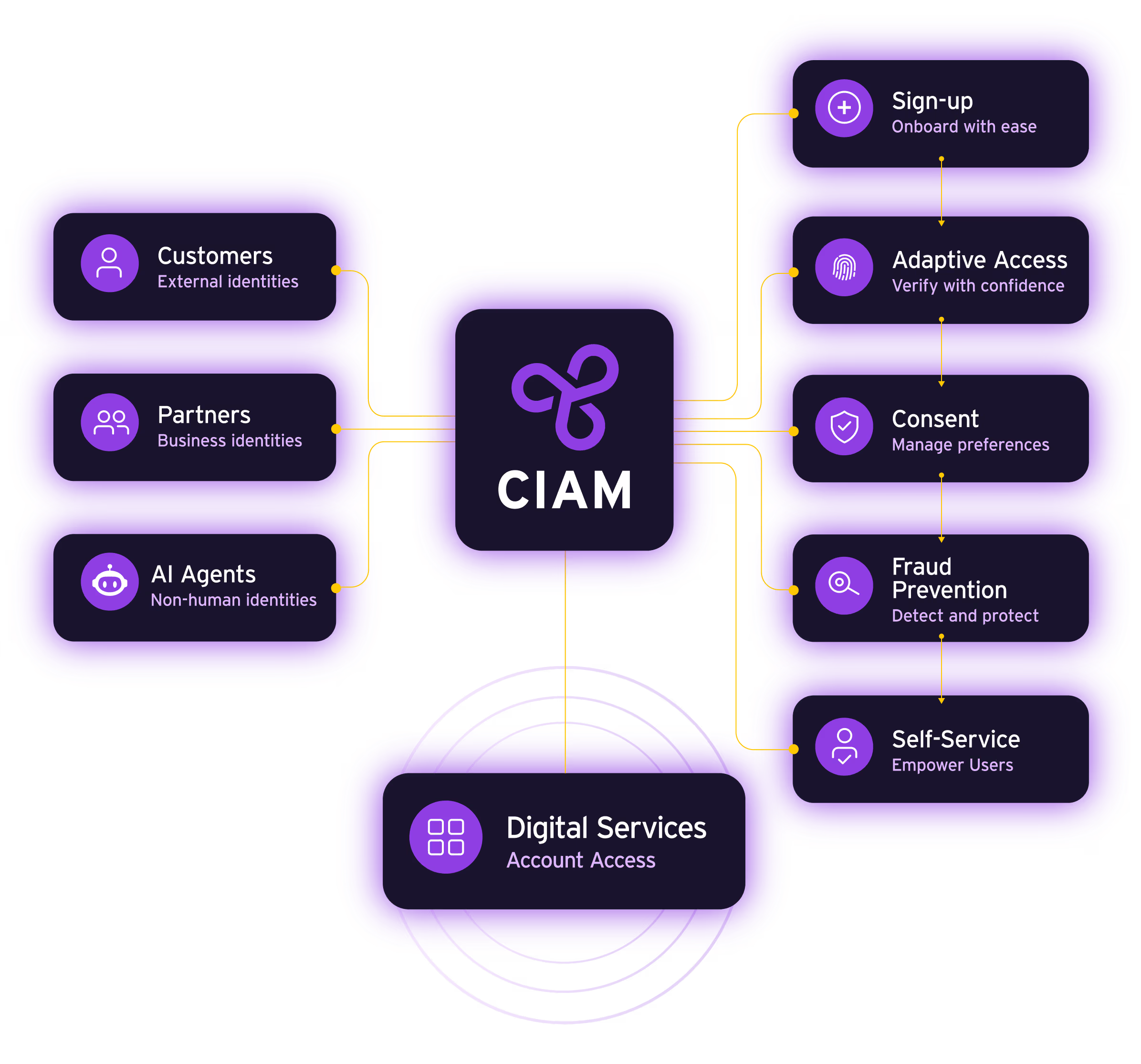

Customer identity and access management, or CIAM, is the category of software that governs how customers and partners register, sign in, and access digital services. It’s built for scale, customer experience, and privacy in ways that workforce identity tools are not.
Why CIAM matters

Customer experience that drives revenue
Low friction sign up and sign in reduce abandonment and increase valuable conversions.

Security and fraud prevention
Stop account takeover, credential stuffing, and fake-account fraud at registration and sign in, in real time

Compliance by design
Consent, privacy, and data residency are built into the identity layer rather than bolted on later.
Business outcomes that matter
Well-executed CIAM shows up in the numbers the whole business cares about, not just security team KPIs

Increase revenue
Convert more customers with low friction identity journeys and upsell with personalization.

Faster time to value
Launch and change identity journeys without waiting on long engineering cycles.

Lower operational cost
Cut manual account support and troubleshooting with self-service and automation.

Stronger security posture
Extend the same adaptive access and fraud controls across human and agent sessions

Compliance confidence
Keep identity data in isolated environments aligned to your data residency requirements.
How CIAM works
A CIAM solution sits between your customers and your applications. When someone registers, signs in, updates a profile, or reaches a protected service, the CIAM layer authenticates them at the right risk level, decides what they can access, captures or checks consent, and records the event for audit. This can also sync changed customer data with your other systems, like your CRM.
Orchestration ties these steps into journeys teams can change without rebuilding from scratch.
.webp)
Core capabilities of a CIAM solution
A mature CIAM solution brings together authentication and adaptive access, authorization and access control, identity orchestration, consent management, fraud prevention, B2B identity and delegated administration, data residency, and customer insights.
.avif)
CIAM vs IAM
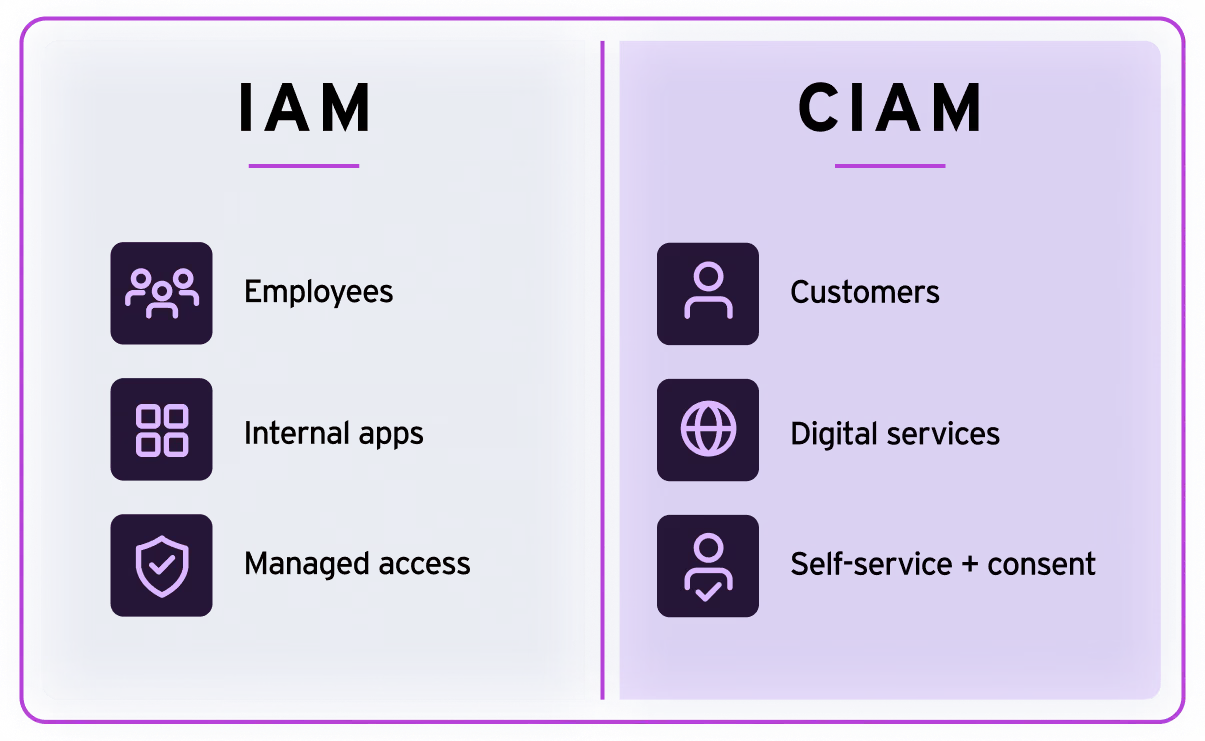
IAM is the umbrella term for all identity and access management software, and it splits into two branches: workforce IAM for employees and CIAM for customers and partners. They differ on scale, experience, and compliance, and AI agents now act on both sides.
Choosing a CIAM solution
The right choice comes down to a few things that are hard to retrofit: architecture and data residency, orchestration and developer extensibility, a prevention-first approach to fraud, B2B and delegated administration, AI agent governance, and total cost of ownership across the full stack.
%201.avif)
Why Strivacity CIAM

Built in, not bolted on
Adaptive access, fraud prevention, and agentic AI identity come as standard, not as separately priced add-ons.

Configure or code
Low-code orchestration for speed, full SDK and API extensibility for custom needs, in the same product.

Single-instance by design
Every brand gets an isolated environment that supports data residency and predictable performance.

Identity for humans and AI agents
Manage people and the agents that act for them in one product, with scoped, revocable authority and a unified audit trail.
Explore CIAM
What is CIAM?
A plain-language guide to CIAM the full identity lifecycle, and the core terms every team should know
CIAM vs IAM
How customer identity differs from workforce identity, and why the distinction shapes the product you choose.
Core capabilities
The capabilities that define a mature CIAM solution, from adaptive access to consent and fraud prevention.
Choosing a CIAM solution
The criteria that separate strong CIAM products from the rest, including architecture, extensibility, and total cost.
CIAM and AI agents
Why autonomous agents are a new type of identity that CIAM must govern, and how to keep them scoped and accountable.
.svg)
Schedule a time to meet with us
Just starting your CIAM research, or ready to see a product demo? Schedule time with one of our identity experts for a conversation tailored to your needs
.avif)