

CIAM vendors How to evaluate and choose the right one
The Customer identity and access management (CIAM) solution you choose decides how customers register, sign in, and interact with your applications, directly driving conversion and trust. Internally, CIAM shapes your systems' security, regulatory compliance, productivity, and readiness for capabilities like AI agents.
The challenge is that the CIAM vendor landscape is crowded: general-purpose IAM vendors like Okta and Ping Identity and purpose-built CIAM products all show up on the same shortlists, but they serve very different needs.
.webp)
What makes a CIAM vendor different from general IAM?
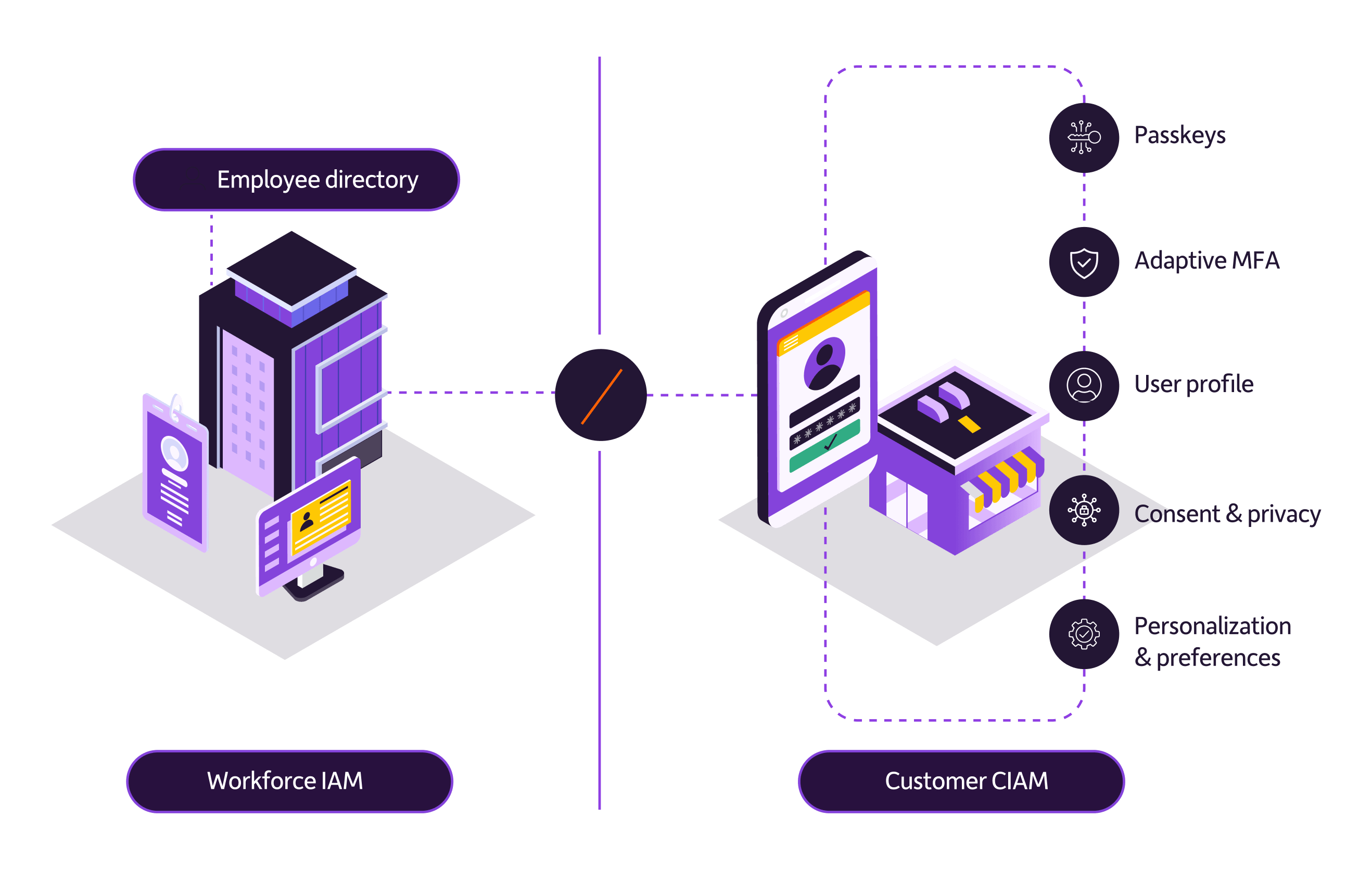
Identity and access management (IAM) is a broad category. It includes workforce IAM (managing employee access to internal systems), privileged access management, identity governance and administration, and CIAM. These are not interchangeable, even though vendors often appear in lists that mix all four.
CIAM is specifically designed for customer-facing identity. This covers the flows that external users (customers, residents, partners, AI agents) experience when interacting with your brand. This means:
Registration and account creation journeys that minimize friction while capturing consent
Authentication methods tuned for customer preferences, including passwordless, social login, and adaptive MFA
Consent management and privacy controls that meet GDPR, CCPA, and data residency requirements
Scalability for millions of external users, with usage patterns that differ significantly from internal workforce systems
A/B testing and identity analytics to optimize journeys for conversion, not just security
Workforce IAM products can be adapted for some of these use cases, but they are built around different assumptions: internal users, IT-managed devices, and predictable access patterns. For customer-facing identity at scale, a purpose-built CIAM solution is almost always the right starting point.
Five criteria for evaluating CIAM vendors
Shortlisting CIAM vendors is easier when you have a consistent framework. These five criteria reflect the areas where CIAM products vary most significantly and where the wrong choice creates the most operational pain.
Architecture and data residency
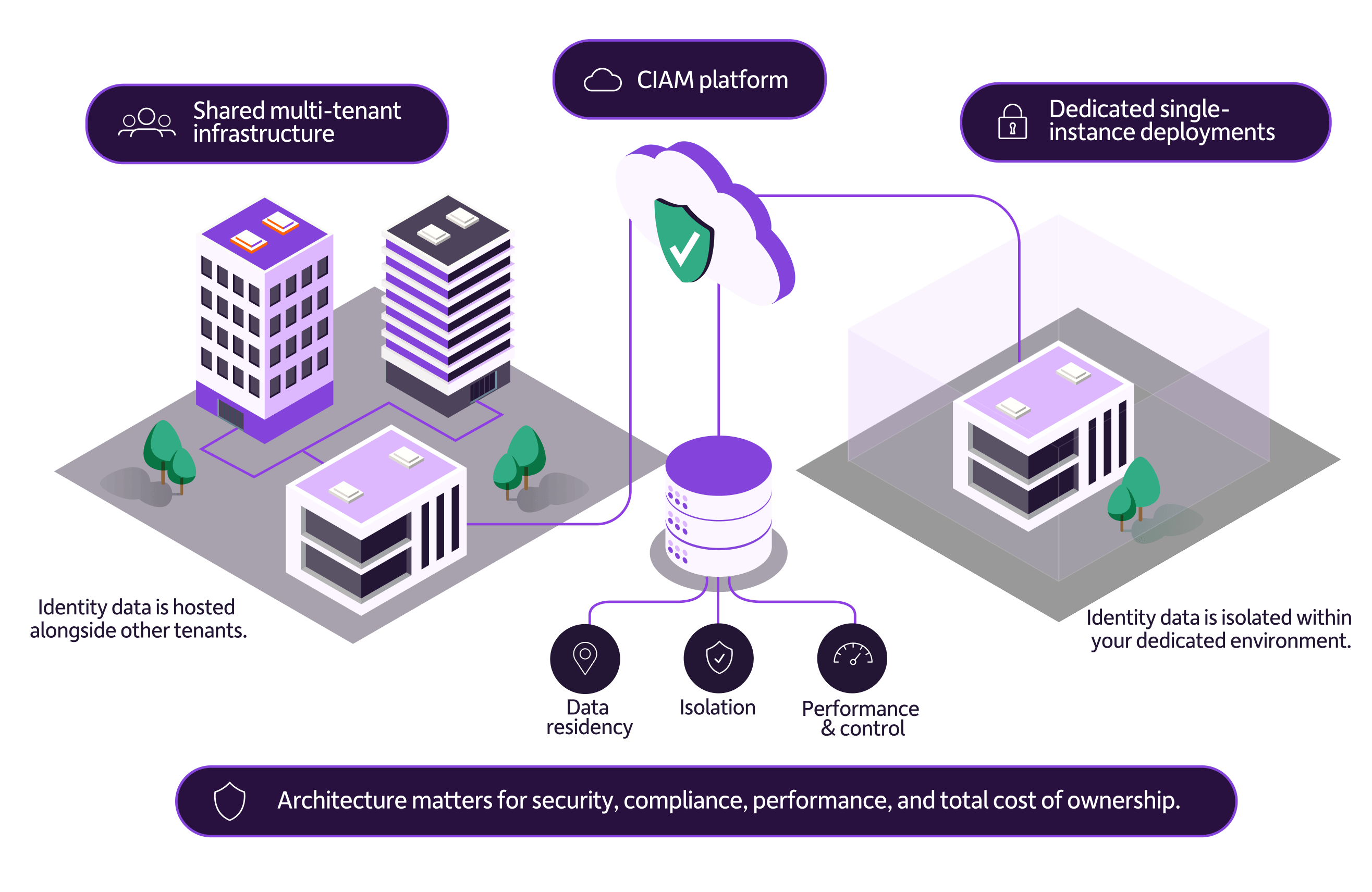
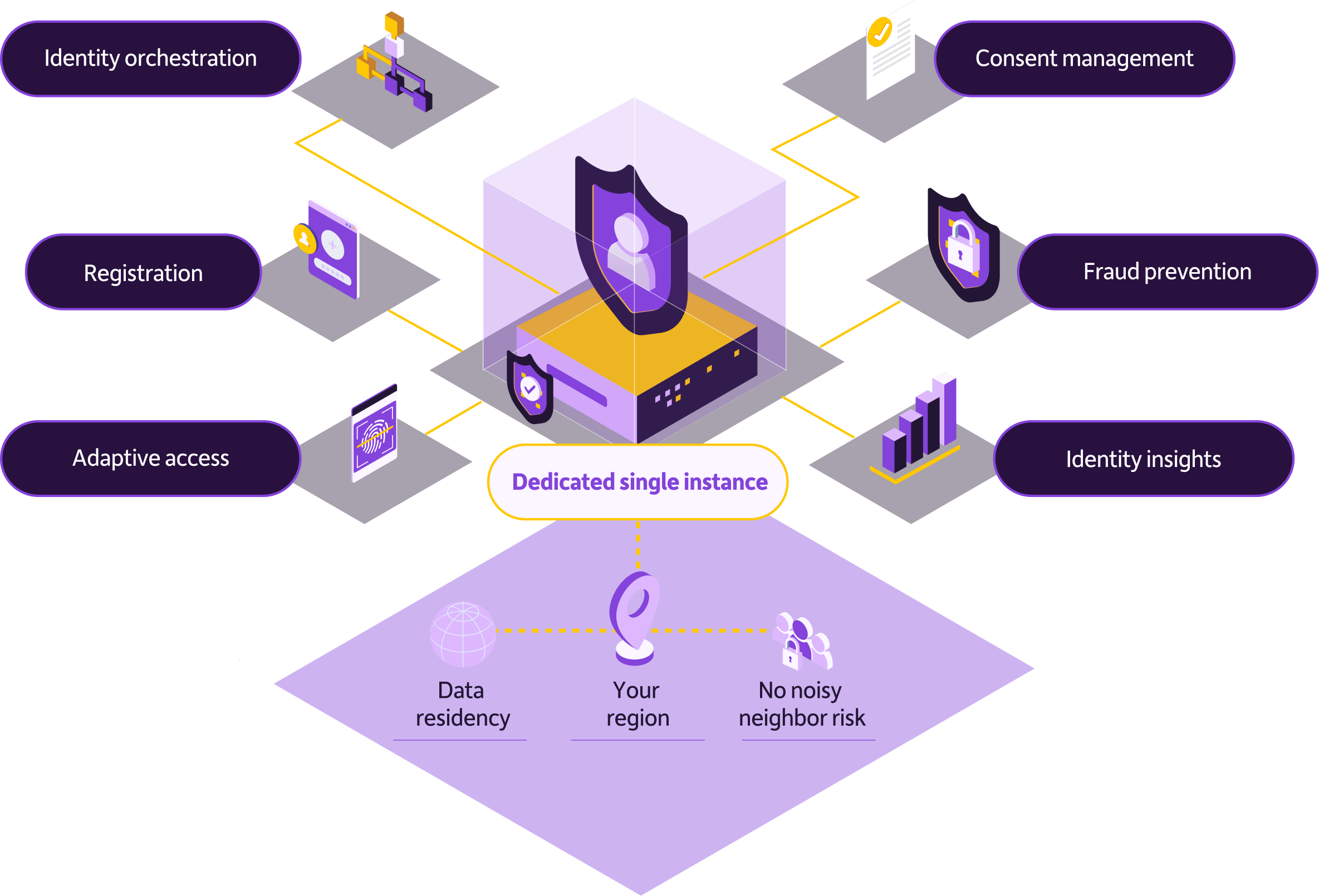
CIAM products are most commonly delivered as SaaS, but the underlying architecture varies. Most vendors use shared multi-tenant infrastructure, whilst a smaller number offer dedicated single-instance deployments on isolated infrastructure.
Architecture matters for three reasons.
- First, data residency: organizations with strict regional requirements (GDPR, sovereign cloud, India's DPDP Act) need control over where identity data lives, and multi-tenant can make this difficult or expensive.
- Second, isolation: another tenant's incident can affect your own authentication flows.
- Third, performance: shared infrastructure means potential latency subject to your neighbors' load.
Dedicated instances give you independent capacity, predictable performance, fault isolation, and controlled maintenance windows. When evaluating vendors, ask whether data residency and isolation controls are native to the product or sold as costly add-ons. Also ask how shared infrastructure handles peak traffic and security incidents.
B2B and partner identity support
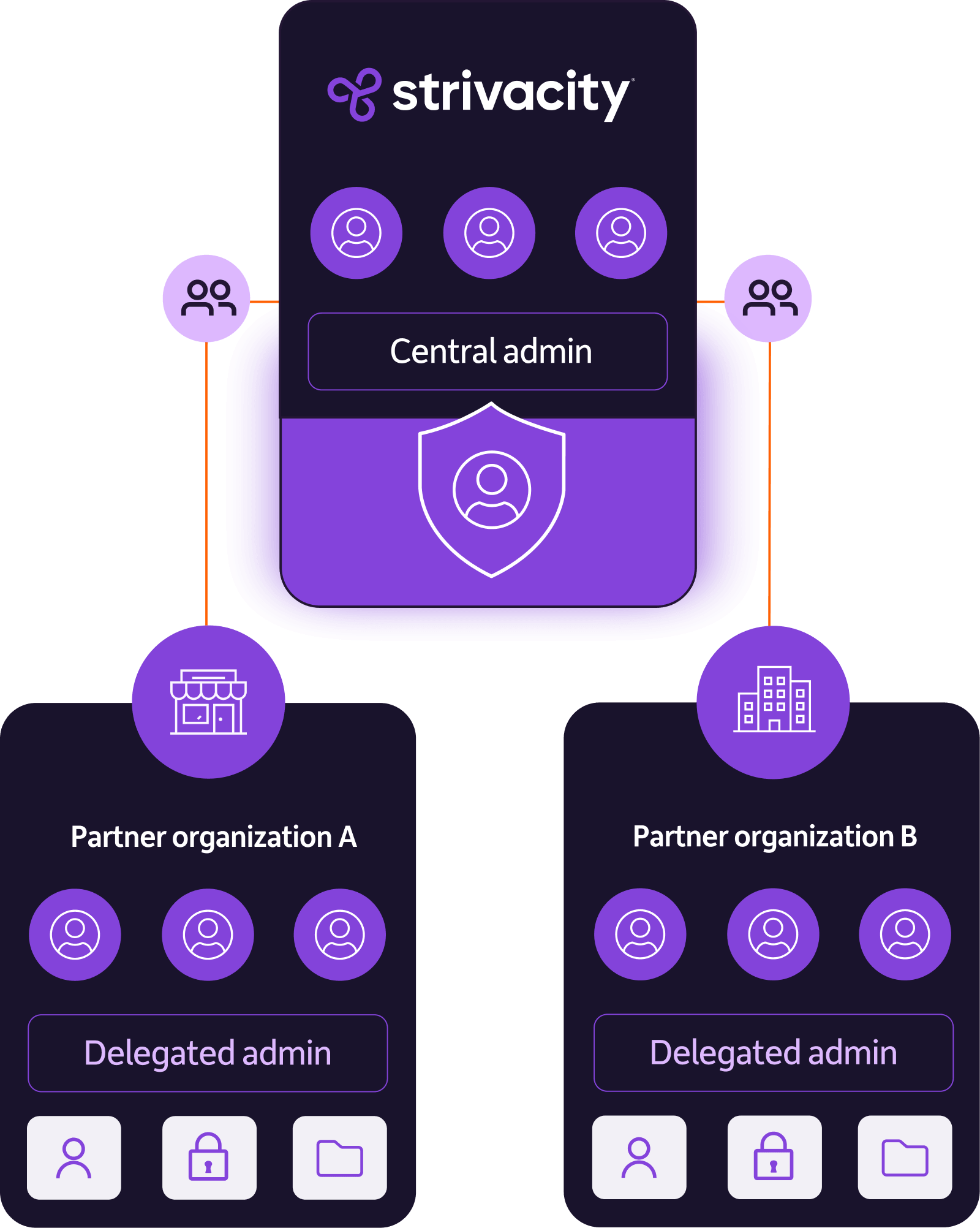
Many organizations need CIAM not just for their direct customers (B2C) but for partners, distributors, and business customers who need to manage their own users (B2B2C). This capability, often called B2B identity or organization identity, allows a brand to give partner companies a delegated admin experience where they manage their own users under the brand's identity framework.
Not all CIAM products support this natively, and some charge extra for the capability, such as Okta. Some require a separate B2B license or significant custom development. If B2B or partner identity is part of your requirements, confirm that the vendor offers it as a built-in capability rather than a bolt-on.
Identity orchestration flexibility
Customer identity journeys are diverse. Registration might require identity verification for regulated industries, step-up authentication for high-risk actions, or progressive profiling to reduce upfront friction. These journeys need to change as your business evolves, and the speed at which you can make those changes depends directly on how the vendor handles identity orchestration.
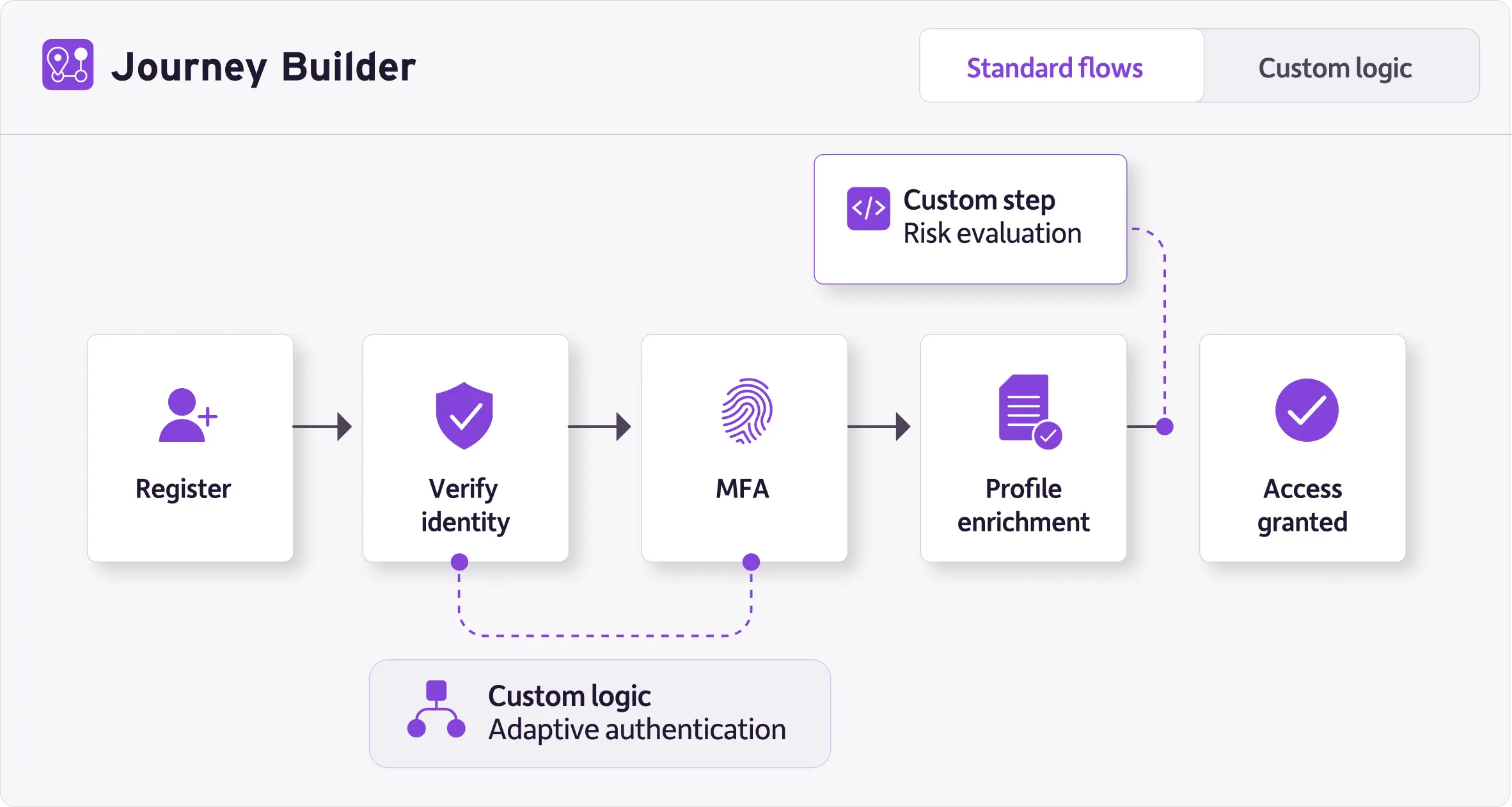
Look for journey builders that let identity and product teams configure standard flows without engineering involvement, and extend with custom logic when the use case demands it, within the same framework.
.webp)
Compliance and consent management
Privacy regulation is not standing still. GDPR, CCPA/CPRA, the EU AI act, and a growing set of regional privacy laws require organizations to capture, manage, and audit customer consent. CIAM is the natural place to handle this, but not all vendors treat consent as a core capability.
Some products offer consent capture as a basic checkbox during registration and nothing more. Strong CIAM vendors provide versioned consent records, auditable consent receipts, preference management centers, and the ability to update terms and capture fresh consent without disrupting the customer experience. If consent management is a compliance requirement for your organization, verify that it is built into the product rather than outsourced to a third-party tool.
.png)
AI agent identity support
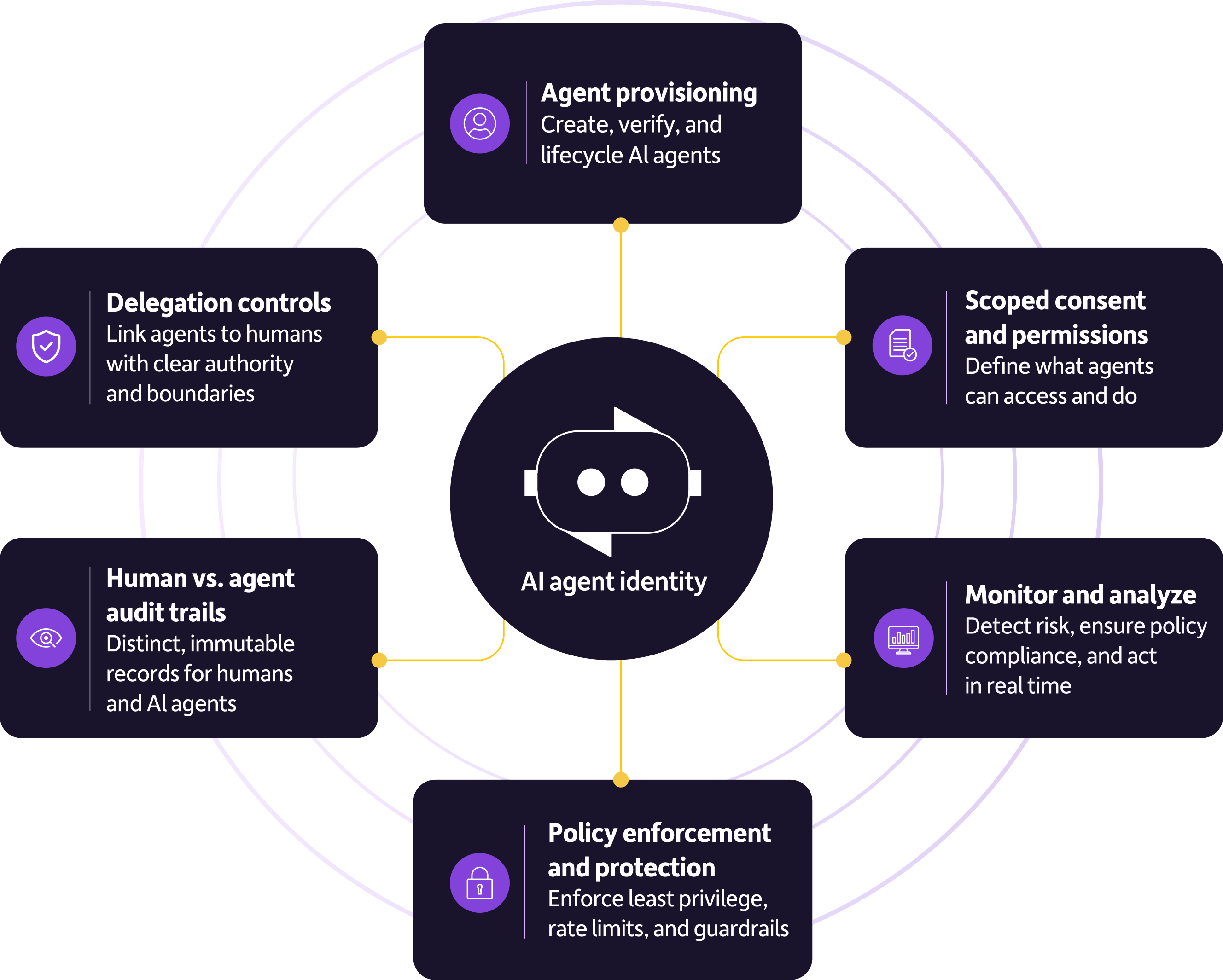
AI agents are beginning to interact with customer accounts and digital services on behalf of customers: completing transactions, retrieving account information, and initiating actions autonomously. This introduces a new category of identity that existing CIAM architectures were not designed to handle.
Forward-looking organizations are beginning to ask: can my CIAM vendor govern AI agents alongside human customers? The capabilities required include agent provisioning and lifecycle management, delegation controls that link agents to the people they act for, consent records scoped to agent actions, and audit trails that distinguish human from agent activity. Regulatory frameworks like the EU AI Act raise the bar for transparency and accountability in how autonomous systems act on a person's behalf.
This is an emerging area, but vendor readiness varies. Some have announced roadmap intentions; a smaller number are shipping capabilities today. If you are evaluating AI adoption alongside a CIAM decision, ask vendors specifically about their approach to AI Agents.
Where CIAM vendors tend to differ most
Some capabilities, such as adaptive MFA, SSO, and social login are now a minimum requirement, and near-universal across enterprise CIAM solutions. The real differentiation shows up in areas that are harder to assess from a feature checklist:

Migration risk
CIAM migrations involve data portability, customer communication, and potential downtime. Look for vendors with documented migration guides, pre-built connectors to common legacy platforms including Okta, Auth0, ForgeRock, Ping Identity, and SAP Customer Data Cloud. Migration support services significantly reduce this risk. Timing matters too: as some CIAM solutions head to end-of-life, organizations are looking for a migration path, so confirm connector availability and references for your specific source product before committing.
Total cost of ownership
Licensing is rarely the full picture. Integration costs, professional services, the need for additional tools to fill capability gaps, and the ongoing engineering overhead of managing a complex identity stack all affect the real cost.
Vendors that consolidate more capabilities into a single product typically reduce TCO compared to multi-vendor approaches.
Proof of value (POV) readiness
A feature checklist tells you what a vendor claims to support. A POV demonstrates whether it actually works in your environment. Vendors should be ready to run a structured POV against your real use cases, testing authentication performance, integration with your stack, and compliance requirements. Vendors that hesitate or push you toward a quick contract signature are telling you something. The best vendors actively support a POV because they're confident in the value they provide.

How Strivacity approaches CIAM
Strivacity is the modern CIAM product built to replace the complexity of legacy identity stacks. It handles customer, partner and AI agent identities natively, in a single product, recognized as a Leader in the Forrester Wave for Customer Identity and Access Management.
Strivacity brings identity orchestration, registration, adaptive access, consent management, fraud prevention, and identity insights together under one architecture. Each deployment runs on a dedicated single instance, supporting data residency requirements and removing the noisy-neighbor risk of shared multi-tenant environments.
.webp)
Strivacity’s Journey Builder lets identity and product teams configure and update pre-built flows or extend with custom logic, without rebuilding from scratch for every change, lowering TCO. Consent management with versioned consent records and a customer preference center is built into the core product, rather than a bolt-on.
When deploying AI agents, Strivacity governs customer-facing agent identity today, applying the same authentication, consent, and audit controls to agents that it applies to human customers.
For organizations moving away from legacy identity platforms, Strivacity provides documented migration guides and pre-built connectors to Okta, Auth0, ForgeRock, Ping Identity, and SAP Customer Data Cloud, reducing the risk and complexity of migration to a modern CIAM solution.
See Strivacity in action
If you are evaluating CIAM vendors and want to understand how Strivacity addresses the criteria above, request a demo.
Our team will walk you through the product against your specific use cases, including data residency, B2B identity, and AI agent readiness.
.svg)
Frequently asked questions about CIAM vendors
CIAM vendors are built specifically for customer-facing identity: registration, authentication, consent, and account management for external customers and partners at scale. General IAM vendors focus primarily on workforce identity (employees accessing internal systems) and may offer CIAM capabilities as an extension, but these are often not as mature or well-suited to high-volume consumer use cases.
Start with your specific requirements: do you need data residency support? Native B2B identity? Flexible identity orchestration? Built-in consent management? Rank these criteria by importance and use them to shortlist vendors. Then evaluate independently validated options: analyst reports like the Forrester Wave provide a useful baseline. Finally, request references from organizations with similar use cases, scale, and industry profile.
Adaptive MFA and risk-based authentication are now expected across all CIAM solutions. Beyond that, look for: built-in fraud prevention (identity fraud detection, phone number fraud, breached password detection), bot protection, behavioral analytics, and consent management with full auditability. The ability to apply these controls consistently across customer, partner, and AI agent identities is increasingly important.
This varies significantly based on the complexity of your current environment, the number of applications integrated, and the volume of customer identities being migrated. Simple environments with a single application and clean data can migrate in weeks. Complex enterprise environments with multiple brands, applications, and legacy integrations typically take three to twelve months. Vendors with documented migration playbooks and dedicated migration support can meaningfully reduce this timeline.
If your organization is deploying or planning to deploy AI agents that interact with customer accounts or applications, yes. CIAM is the logical governance layer for AI agent identity, since agents require the same foundational controls as human customers: authentication, authorization, consent, and auditability. Vendors that can govern agent identity today, not just describe a roadmap, will be better positioned as agentic AI adoption grows. Ask whether a vendor can manage AI agent identity now, and how it links an agent to the human it acts for.
Keycloak is the most common starting point for teams considering building their own CIAM solution. It's open source, it handles basic authentication, and it removes upfront licensing costs. Teams also evaluate other open-source options like Authentik, Ory, and Zitadel, each with their own tradeoffs in complexity, feature depth, and operational burden. For internal or developer-facing use cases, these solutions work well initially.
For customer-facing identity at scale, the gaps begin to surface in areas the business cares about the most: consent management and preference centers, native B2B organization support, identity journey orchestration without custom code, AI agent identity governance, built-in fraud prevention, and operational SLAs. Open-source solutions leave most of these capabilities to the organization to build and maintain. Running any of them in production at scale also requires dedicated identity engineering expertise. As requirements evolve into new privacy regulations, new authentication methods, and new AI use cases, your deployment needs to keep pace. Commercial CIAM solutions absorb that maintenance burden as part of the product.
The real question isn't build vs. buy. It's whether building and maintaining identity security infrastructure is your organization's core competency, or whether that investment is better spent elsewhere. If you're already running Keycloak or another solution and are looking to migrate to a commercial CIAM solution, look for one that supports both just-in-time and bulk import migration paths so existing users can move over without password resets or disruption.
Licensing is the most visible line in a build vs. buy comparison, but rarely the deciding factor. When evaluating total cost of ownership, consider:
- Engineering time to build and maintain core capabilities: authentication flows, session management, token handling, MFA, and social login
- Compliance overhead: GDPR and CCPA require versioned consent records, auditable receipts, and preference management, none of which are trivial to build and keep current
- Security maintenance: breached password detection, bot protection, and adaptive risk controls require continuous updates as threat patterns evolve
- Operational burden: incidents, scaling events, and maintenance windows in a custom identity stack fall entirely on your team
- Opportunity cost: every sprint spent on identity infrastructure is a sprint not spent on your product
By the time you've built a full-featured, compliant, production-grade CIAM layer, the total investment typically exceeds what a commercial CIAM solution would have cost over the same period.
Ready to move beyond legacy CIAM?
Secure, intelligent access management built to enable trusted digital interactions at scale.
.avif)