

.svg)
The Ghost Student Problem: A Pre-Enrollment Security Checklist for Higher Ed

Every enrollment period, colleges and universities brace for a spike in applications, financial aid submissions, and new student accounts. But not every "student" showing up in this cycle is real.
Ghost students are fake or bot-generated enrollments, often created in bulk by fraud rings to siphon financial aid dollars before anyone notices the student never attends a single class. Community colleges have been hit hardest, since open enrollment and fast disbursement timelines make them easier targets, but no institution is immune once enrollment volume spikes.
Timing is the real problem: most identity checks happen after an account is created, after aid is disbursed, after the damage is done. The institutions that catch ghost students early are the ones that build verification into the enrollment flow itself, before peak volume hits.
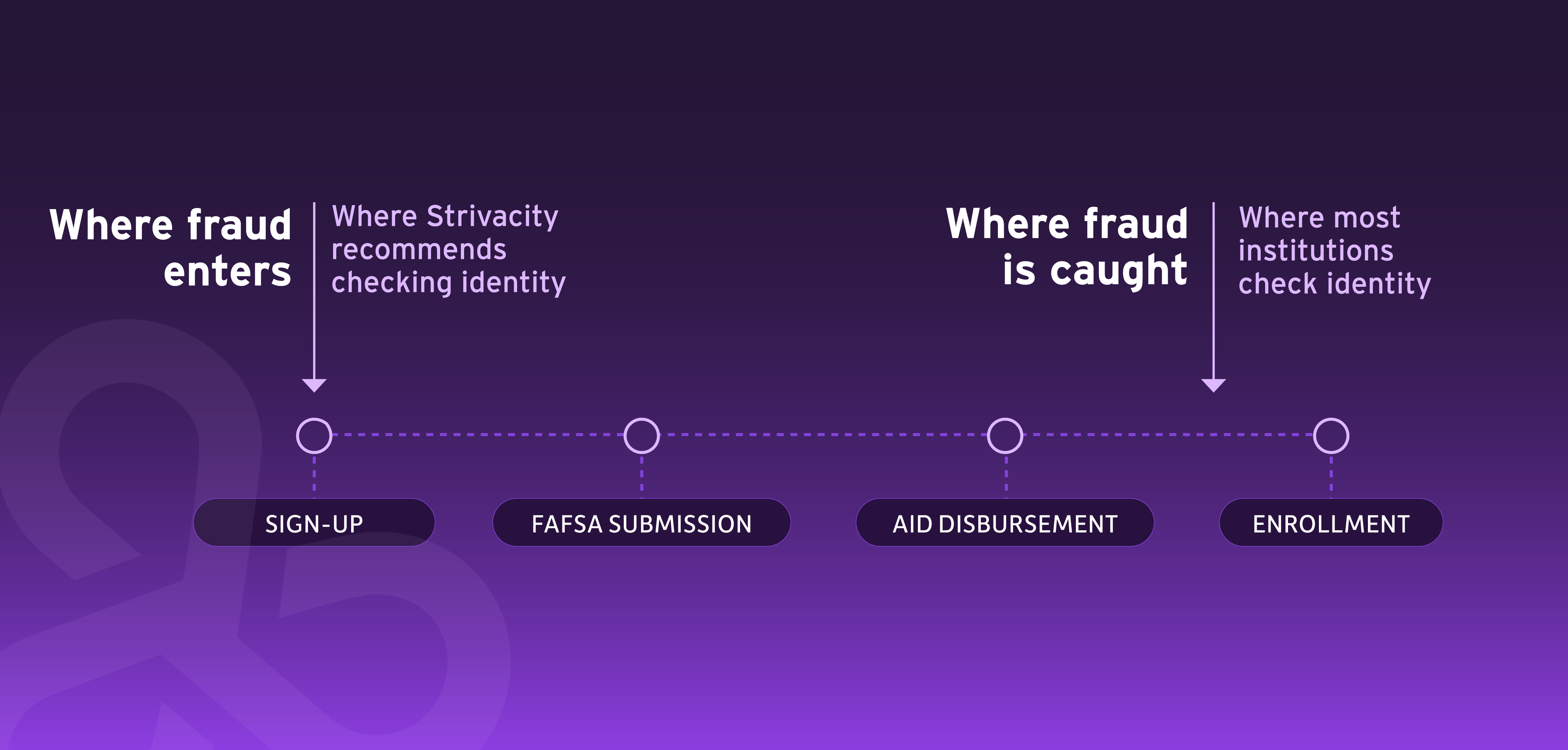
Here's a checklist to run before your next enrollment surge.
Before Peak Enrollment: Security Checklist
1. Verify identity at account creation, not just at a financial aid submission. Verify who's behind an account at the very first sign-up step, before financial aid forms are ever submitted. Build identity verification into that first step, so fraudulent accounts get flagged before they progress any further.
2. Watch for bulk or bot-driven signup patterns. Batches of signups from the same device,
IP range, or browser fingerprint are a bot signal, not a real student pattern. Set up monitoring that flags unusual signup volume or repeated patterns ahead of your peak enrollment window.
3. Flag duplicate or synthetic identities across applications. Fraud rings often reuse the same stolen or synthetic identity details across multiple applications. Cross-reference new accounts against existing records to catch duplicates and inconsistencies early.
4. Rate-limit signups during high-traffic enrollment windows. Legitimate enrollment surges and fraud-driven bot surges can look similar in raw volume. Rate-limiting combined with identity checks lets you handle real demand without opening the door to bulk fraudulent signups.
5. Cross-check financial aid disbursement against verified identity. A completed form proves a form was filled out, nothing more. Gate aid disbursement on verified, confirmed identity.
6. Monitor for account activity that doesn't match a real student journey. Ghost students typically never log back in after the initial enrollment and aid disbursement. Track post-enrollment engagement (LMS logins, course access, advising appointments) as a secondary signal for accounts worth a second look.
7. Build a fast escalation path for flagged accounts. Speed matters. The longer a suspicious account sits unresolved, the more likely aid has already gone out the door. Make sure flagged accounts route to a team that can act within days, not weeks.
8. Revisit your verification approach every enrollment cycle. Fraud tactics evolve as fast as detection does. What caught last year's fraud attempts may not catch this year's. Review and adjust your identity verification approach before each major enrollment period, not after a new fraud pattern makes headlines.
Ghost students are a current risk, and peak enrollment is exactly when institutions are most exposed. Building identity verification into the front end of your enrollment process, rather than bolting it on after the fact, is the difference between catching fraud early and explaining it to your board later.
Want to see how Strivacity helps higher ed institutions verify real students from the first click?